
The Risk to Business Aviation
There is a direct relationship between the proximity to conflict and the cost of conflict. The cost may be physical, economic and/or social. Proximity to the conflict acts as a multiplier to the cost. The cost may be short or long term, significant or imperceptible, predictable and/or underestimated. But there is a cost.
2026 demonstrates the global cost of conflict more acutely than ever before. Far outside of the direct conflict zones, the bombardment of minute to minute media exposure on impact of conflict is inescapable. Moreover, the economic impact on energy means that each household worldwide is feeling the cost whatever their views on the conflict maybe.
The price of oil is rising no matter what measures are being put in place by business, industry and governments. Whether this is short, medium, or long term, there is simply no consensus. Despite the political arguments and grand statements, the only thing that matters to most of global society is the price they are paying right now and impact on their personal and business security.
In 2025, the CEO of ADNOC (Sultan Al-Jaber of the UAE state oil company) stated that it was “time to make energy great again”.

In May 2026, Saudi Aramco has warned that the world’s petrol and jet fuel supplies will reach critically low levels in the next few months. This contrast is a global issue impacting all industries and is being felt by every person and business. The change in the market in just one year is inexplicable.
But does this mean that conflict is bad for business?
Traditionally sectors such as defense, cyber security and logistics have profited during wartime. The Pentagon stated that its current expenditure for the Iran war was estimated at $29 billion in early May 2026, after just 10 weeks. Furthermore, betting on the energy markets has earned some a tidy profit.
For business aviation, there have also been winners and losers. Let’s take the Iran war as an example; there was a mass exodus of business aircraft based in the Gulf states in the first 11 days of the war ($3 billion of business aircraft had left by 19 March 2026).
Transactionally, there was a sudden pause in ‘nearly closed’ aircraft transactions to enable purchasers to get enhanced communications and satellite software installed. Aircraft owners have started looking to upgrade current aircraft fleets for longer range models to avoid warzones and notable conflict hot spots. And in terms of tax, insurance and legal: each repositioning or change in aircraft creates potential liability and consequences which need addressing. This is all good news for aircraft manufacturers, communication suppliers, non Gulf airports and FBO’s, and aviation advisors.
The news is not all rosy, however. Short term reactions are not long term stability. And with the cumulative effect of several conflicts occurring worldwide over the last five years, the energy crisis now has the potential to defeat the positives. If jet fuel runs out, then aircraft can’t fly; it’s as simple as that.
In April 2026, Energy Commissioner, Dan Jørgensen, stated the European Commission “would increase monitoring of fuel stocks and refining capacities, coordinate supplies and potentially redistribute jet fuel across the bloc, echoing pandemic era efforts to share vaccine supplies”. He went further, telling the Financial Times “We are moving from a crisis that has so far been primarily a crisis of too high prices. Now, we’re moving towards a crisis of supply. This we will see first and primarily on jet fuels. We are approaching this very rapidly.”

And the impact on aviation fuel is not just a European problem. US Airline spirit was the first to fold; now there are signs of many other airlines starting to wobble as the cost of fuel.
In a Financial Times interview Lufthansa Chief Executive Carsten Spohr said “the stronger will become stronger, and the weaker ones will become weaker.”

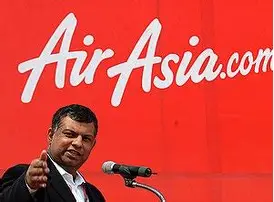
Tony Fernandes, co-founder of AirAsia, agreed: “I get the feeling that there could be more mergers in store for even the bigger airlines.”
For business aviation, the business model is different, but the fuel impact is the same. Many flights have become longer by 2-3 hours with some aircraft not being able to complete trips without a fuel stop. Larger charter operators such as VistaJet and ExecuJet have larger aircraft with more range which allows them to temporarily absorb regional instability better than smaller operators who are directly impacted by increasing insurance risks, crew and security costs, and limited aircraft range. All of this creates intense pressure on business margins which were already fragile. It is a question of when, not if, before some of these businesses start to fail.
The question is ‘can business aviation withstand the costs associated with conflict?’
While proximity to conflict zones has a direct and heavier impact and on both business aviation and customers within its radius, the global nature of aviation means the cost of conflict is increasingly being felt by all. It is true that not all will survive, however, conflict does reinforce the strategic value of business aviation in times of crisis. Those with flexible networks and operating models will emerge stronger. It also does not negate the need for short range aircraft and nimble operators; however, there is a real need for business models to look at their geo political environment to try and predict future cost impact from the global environment.
In our next instalment we explore how AI is eating the world and how to apply it effectively.